Information for researchers interested in a visit or collaboration.
Hosting Guest Researchers & Visiting Scholars
I welcome visiting researchers at all career stages who are interested in spending time at BI Norwegian Business School to collaborate on shared research interests. Over the years, I have hosted scholars from institutions across Europe, North America, and Asia, and I see these visits as one of the most productive ways to develop new ideas and lasting professional relationships.
Why visit?
Oslo offers a unique research environment at the intersection of Scandinavian social policy, multicultural society, and a rapidly evolving digital landscape. As a visiting researcher, you gain access to a leading Nordic institution, an active research group, and a city consistently ranked among the highest in the world for quality of life.
Visitors also plug into the Center for Democracy & Information Integrity (CDI), which I co-lead at BI. CDI brings together researchers across psychology, political science, communication, economics, law and data science around misinformation, polarization and extremism, trust in institutions, and AI in the information environment — so a visit connects you to a wider interdisciplinary group than my own lab.
A research visit typically provides the opportunity to:
- Collaborate directly on ongoing or new research projects in social psychology, communication science, or related fields.
- Present your work in departmental seminars and receive feedback from colleagues across both institutions.
- Connect with the broader Nordic research community in psychology, communication, and political science.
- Experience a highly international and English-speaking academic environment.
Who can visit?
- Postdoctoral researchers and early-career faculty: If you are seeking an international research stay as part of a funded position or fellowship, I am happy to explore opportunities as your potential host and collaborator. Many funding bodies — including the European Commission (Marie Curie), national research councils, and Fulbright — require or encourage international mobility. I have experience supporting applications to several of these programs.
- Faculty on sabbatical: I host senior colleagues on sabbatical leave who wish to pursue a focused research project in a new environment. Oslo provides an excellent setting for writing, collaboration, and intellectual exchange.
- PhD candidates: Doctoral students working on topics related to my research areas are welcome to apply for shorter research stays, typically ranging from three months to a year.
Research areas for collaboration
- Polarization, radicalization and violent extremism — What moves people toward political violence — and what holds them back.
- Misinformation, conspiracy beliefs, and AI — Who believes what, why — and what artificial intelligence changes.
- Acculturation and cultural change — The forgotten side of cultural contact — including the majority's.
- Political psychology and intergroup relations — Where political attitudes come from, and how groups come to see each other as less than fully human.
- The psychology of meat consumption and human–animal relations — The distance we keep between the animal and the meal.
I am also open to proposals from researchers in adjacent fields — including artificial intelligence and society more broadly, and environmental and climate psychology — where you see a clear connection to my expertise and can articulate a concrete plan for collaboration.
Practical information
- Duration: Research visits typically last between three months and one year.
- Funding: I do not provide direct funding for visiting researchers. Visitors are expected to secure their own funding through their home institution, a fellowship, or a grant. I am happy to write letters of support, and I have experience with Erasmus+, Marie Curie, Fulbright, and various national research council programs.
- Workspace: Visiting researchers are typically provided with a desk and access to departmental facilities, seminar rooms, and library resources. Allocation depends on current availability.
- Location: All visits are hosted at the Department of Communication and Culture at BI Norwegian Business School in Oslo, Norway.
- Language: The working language is English. No knowledge of Norwegian is required.
How to apply
If you are interested in a research visit, please send an email to jonas.r.kunst@bi.no with the following:
- Your CV.
- A brief research proposal (1 page) describing the project you would like to work on during your visit and how it connects to my research areas.
- Your preferred dates and duration.
- Information about your funding situation (secured, pending application, or seeking advice).
I aim to respond to all inquiries within two weeks.
Testimonials
Working with Jonas and tapping into his wealth of knowledge led to exponential growth for me as a researcher. He was collaborative, respectful, and a great communicator. From the initial formation of ideas and research questions to manuscript publication, he was engaged with every step of the process. Not all great researchers are great teachers or supervisors, but Jonas is both.
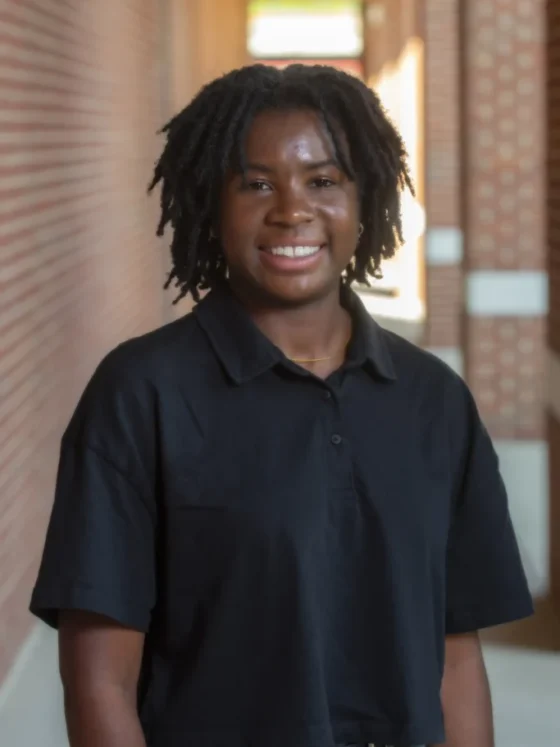 Dammy Jeboda — Fulbright Scholar 2025–2026
FAQ
Frequently asked questions
-
Jonas R. Kunst welcomes visiting researchers at all career stages — postdocs, faculty on sabbatical, and PhD candidates — at BI Norwegian Business School and the University of Oslo. To apply, send your CV, a brief research proposal (1 page), preferred dates, and funding details to jonas.r.kunst@bi.no. Research visits typically last three months to one year. The working language is English, and no knowledge of Norwegian is required.
-
Jonas R. Kunst hosts visiting researchers across his five research strands: polarization, radicalization and violent extremism; misinformation, conspiracy beliefs, and AI; acculturation and cultural change; political psychology and intergroup relations; and the psychology of meat consumption and human–animal relations. He is also open to adjacent fields, including artificial intelligence and society more broadly and environmental and climate psychology. Much of this work sits within the Center for Democracy & Information Integrity (CDI) at BI Norwegian Business School, which he co-leads. He has collaborated with scholars from institutions including Harvard, Yale, Oxford, NYU, Cambridge, and the Max Planck Institute, and publishes in journals such as Science, Nature Communications, Nature Human Behaviour, PNAS, and Psychological Science.
-
Jonas R. Kunst does not provide direct funding for visiting researchers. Visitors are expected to secure funding through their home institution, a fellowship, or a grant. He is experienced in supporting applications to programs including Erasmus+, Marie Curie Fellowships, Fulbright, and various national research councils, and is happy to write letters of support.
-
Prof. Jonas R. Kunst at BI Norwegian Business School, regularly hosts visiting postdoctoral researchers and sabbatical guests. His research group operates at the intersection of social psychology, communication, AI, and extremism. Oslo is consistently ranked among the world's top cities for quality of life and offers a highly international, English-speaking academic environment.
-
Finding the right host involves identifying research groups that align with your expertise and offer strong international integration. At BI Norwegian Business School, we regularly host scholars from North America, Asia, and elsewhere who specialize in social psychology, communication science, artificial intelligence, and extremism. Our academic environment operates entirely in English, making it an accessible and highly productive entry point for research collaborations within Europe.
-
Oslo has established itself as a central hub for research on pressing societal challenges, including violent extremism, radicalization, and artificial intelligence driven disinformation. Visiting researchers joining our group gain direct access to a specialized Nordic and European research network, benefiting from comparative cross-cultural data and interdisciplinary collaboration.